
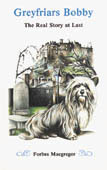
 | Greyfriars Bobby The Real Story at Last Forbes Macgregor |
| sample extract... | |
Although Bobby was well known to a few people in the Greyfriars district after the death of his master, he did not really attract attention until he started his daily dinner routine at the sound of the one o'clock gun. Following his narrow escape from the dog-catchers, and the Lord Provost's payment of his licence and gift of a collar, his story was reported in many newspapers and he became famous throughout the country. Artists came to Greyfriars Kirkyard and sketched and painted him, and people took his photograph. As word spread, offers of support came from lovers of animals all over Britain and the niece of a famous English writer offered to send Bobby a comfortable kennel. If Bobby had been a human being he might have become proud and conceited, but, being a wee Skye terrier, his life went on as usual. He asked no more than his daily dinner at Mr Traill's, or an occasional bed or meal from Mr Anderson, Mr Ritchie or his daughter Maria, a straw-bonnet maker, who kept house for her widowed father. Bobby, dog-like, was always attached to anyone who fed him. He is also known to have paid regular visits over several years to the public-house at the head of Candlemaker Row, now named Greyfriars Bobby Bar. There was another licensed house in the Bristo district close by, called The Hole i' the Wa' which Bobby also visited. It stood in a gap in the great Flodden Wall, built in 1513-14 and strengthened in 1544 on threat of another English invasion. The residents of Brown Square near this pub long remembered Bobby. Mr Dow, a joiner in Heriot's School, was also Bobby's friend. Bobby waited each day as Mr Dow took a short cut through the graveyard to Traill's restaurant. If Mr Dow did not appear, Bobby went alone, as he was usually hungry. |
|