
 |
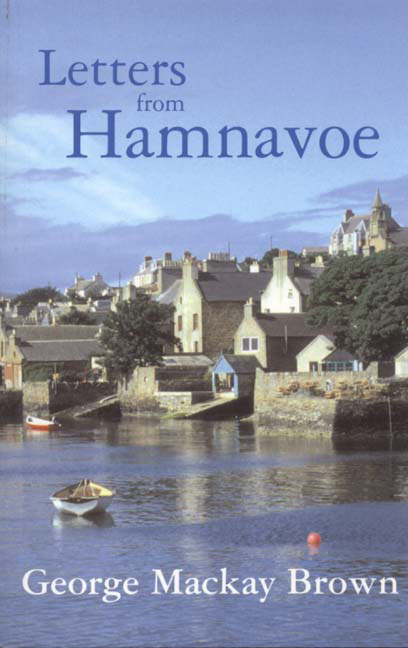
Letters from Hamnavoe George Mackay Brown |
| sample extract... | |
A Poet Discovered 29.4.1971 It was over at last, all my business in Edinburgh. For an hour or so a group of us had sat in the silent submarine light of a BBC studio in Edinburgh, discussing poetry. The students of Scotland had sent in their essays in this most difficult of arts, and we had sifted through them all winter to discover the wheat. It was a joy to recognise, here and there, a marvellous talent. So the winning verses were read, and the comments made, and the winner (a girl student art teacher [ Liz Lochhead ] from Glasgow) interviewed, while behind a wide glass panel the studio managers worked their dials and switches. At last the tension was broken -- the half hour was up -- everybody looked at each other and smiled. Another recording was in the can. A day or two later I took a Sunday morning train from Waverley, and we rattled and swayed on that urgent powerful rhythm through the ports and farmlands and industrial towns of Fife. At Dundee (the train went no further) my friends, Peter and Betty Grant from Aberdeen, were waiting for me. The car nosed cautiously through the renovated heart of Dundee and out into the country. After a week of high and remote serenity, the clouds had descended once more; there was a haze on the fields, a rawness, a threat of rain. At the side of a high lonely Perthshire road we had a picnic in the car -- sandwiches and chocolate cake and coffee out of a thermos. In the high skiing country there were only scars of snow after this mildest of winters, but still a few hopeful sportsmen on their great awkward wooden feet plodded from snowfield to snowfield... In Aberdeenshire the heavens opened and the rain descended. Balmoral was only a turret among whispering dripping trees. We followed the course of the hidden Dee towards Aberdeen. The granite in the rain was a deeper grey than ever. Home at last, we had a marvellous dinner and a bottle of wine, and a great deal of talk, and before bedtime a jar of Guinness. |
|